
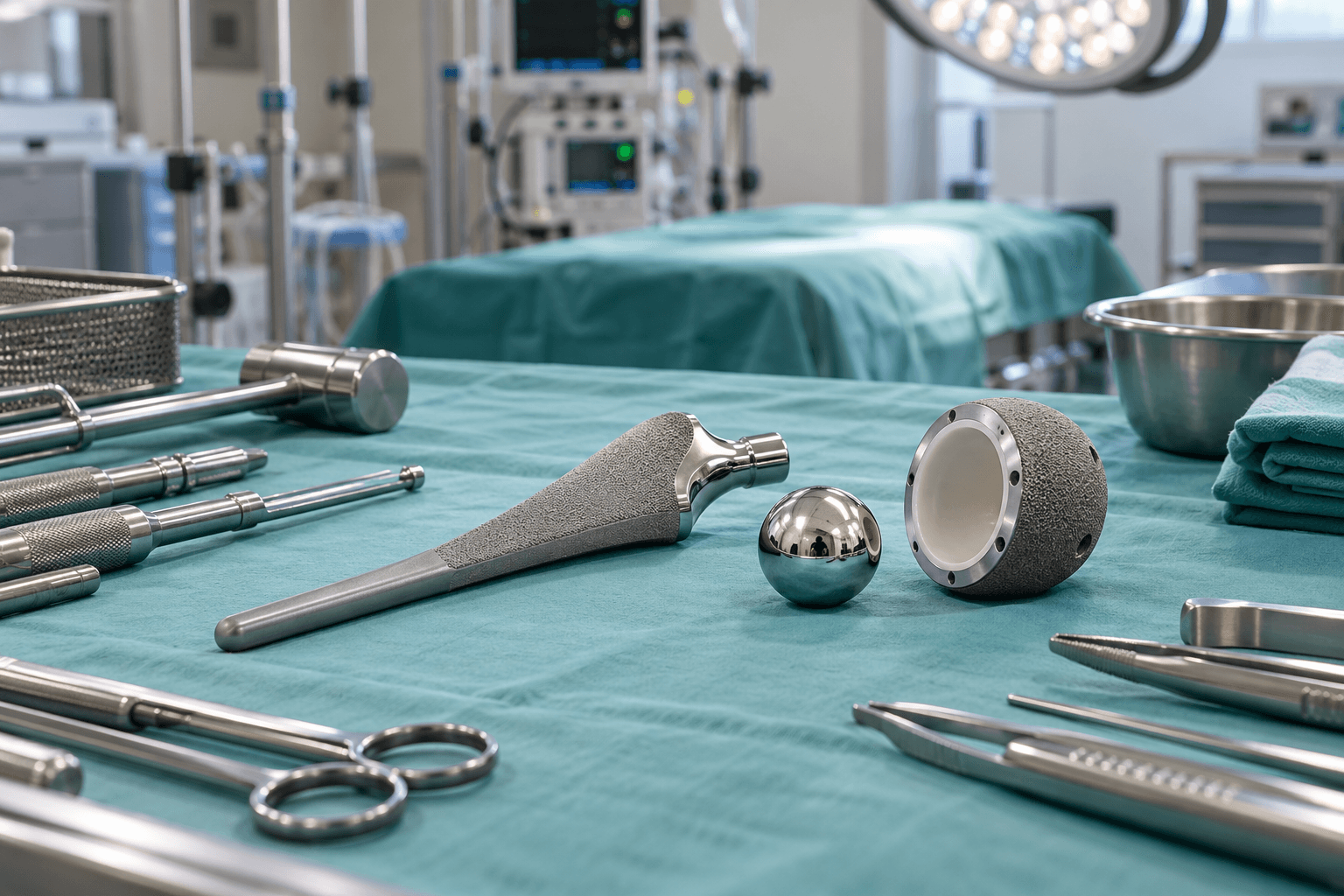
In October 2026, Mulago National Referral Hospital carried out a free hip-replacement camp for people living with sickle cell disease and osteonecrosis. Uganda Radio Network reported that 25 operations were completed and that donated implants made the camp possible. The hospital's executive director said the hospital has qualified surgeons but can face shortages of implants and other supplies. Read the full report from The Observer, published 16 October 2026.
The report is a specific example, not a measure of national demand. The camp also highlights the procurement work behind a specialist service. That work includes an appropriate implant system, compatible instruments, reliable supply, theatre and recovery capacity, and funding for the wider episode of care.
Plan around the complete implant system
A hip implant is not a single interchangeable part. A procurement enquiry should identify the manufacturer and exact system, component options and sizes required by the clinical team, compatible instrumentation, and any constraints from equipment already in use. The supplier's quotation, product labels, instructions, and regulatory documents should refer to the same product and model.
Check the documents and the delivery plan
Before confirming a purchase, the facility should verify the applicable Uganda registration and import or supply status, product-specific approvals or conformity documents, packaging and traceability details, availability, lead time, and quotation validity. The Uganda National Drug Authority's medical-device guidance explains the local registration and licensing framework. FDA clearance or approval and CE marking are relevant product-level evidence where applicable; they do not replace Uganda's requirements or establish that every model has the same status.
Planning for continuity after a surgical camp
A time-limited camp can deliver important care, but a dependable service also needs forward planning for replenishment, instrument processing, staff familiarity with the selected system, follow-up, and the records that support traceability. These needs should be planned by the facility's clinical, procurement, biomedical, and stores teams together.
Suppliers can help by identifying the exact product, providing its documents, and giving timely availability updates. Maurivik Uganda handles enquiries about orthopaedic and surgical products; the current scope and documents for a particular system should be confirmed directly.
This article reports on a news item and offers general procurement context. Decisions about patient assessment, suitability for surgery, and implant selection belong to qualified clinical teams.
This article is general information. Product status can change; check current manufacturer documents and regulator records for the specific product.
Ask about a product